Garden Sauna or Garden Hot Tub? Choosing Criteria
One spot in the garden and one budget: criteria for choosing between an outdoor sauna and a wooden garden hot tub - ritual, siting, upkeep, and which one comes first.
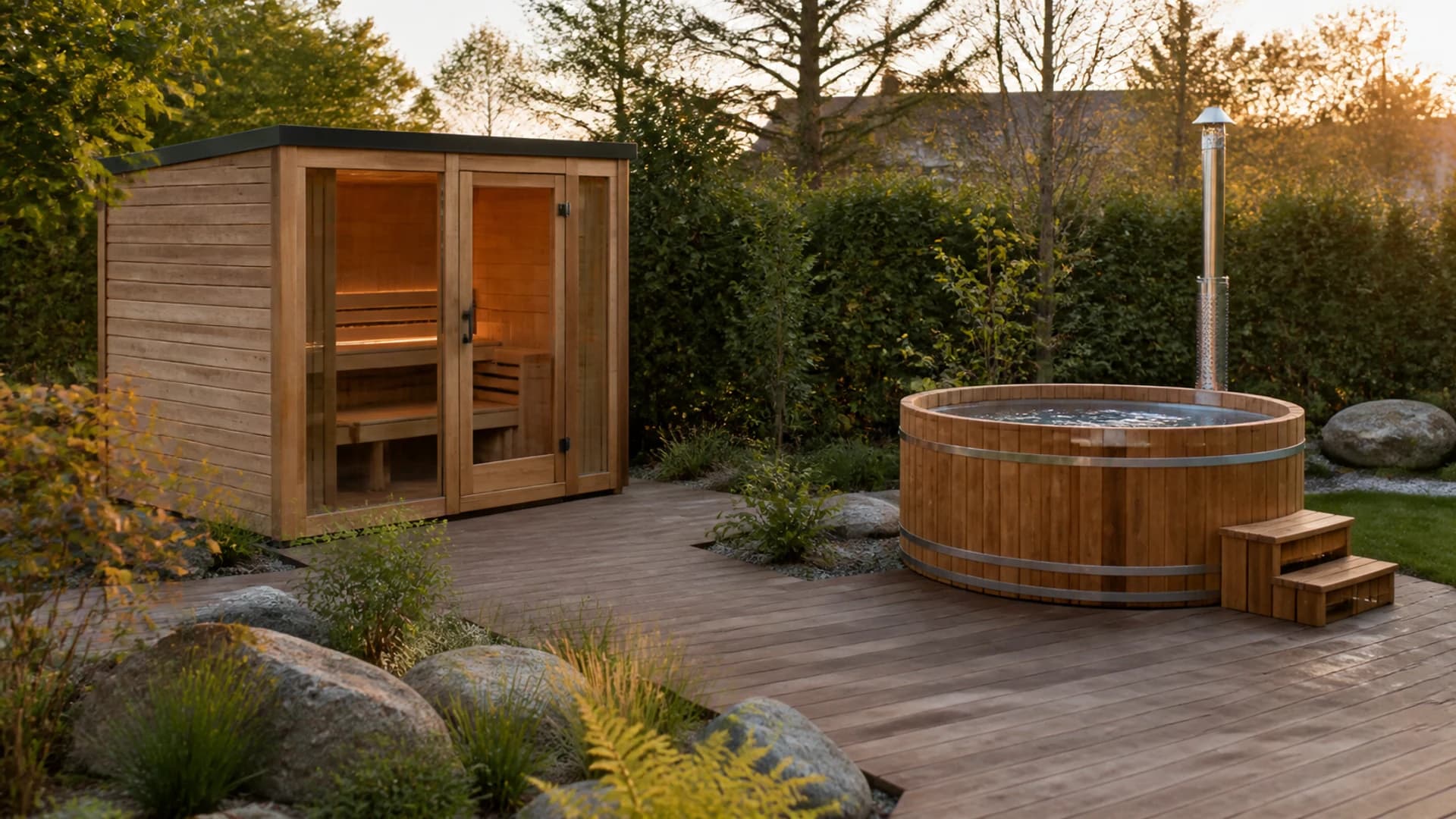
Garden sauna or garden hot tub - what you are actually choosing
You are choosing between two different garden rituals, not between a better and a worse product. An outdoor sauna is a dry heat cabin; a garden hot tub is a wooden vessel you soak in. If you have one usable spot in the garden and one budget, make the decision at category level first, and compare specific configurations only after that.
This article does not rank models or brands. It compares how you will use each one, what each one demands of the site, and what upkeep each one asks of you.
What each category actually is
A garden hot tub is an outdoor soaking vessel: water, wood, bathing outdoors in direct contact with your surroundings. It is garden equipment with its own demands on ground, water, and care, not a bathroom tub moved onto the terrace.
An outdoor sauna is a separate cabin with a heater, where you use dry heat. It needs no filling and no water changes, but it does need to be brought up to heat before every use, and it needs its interior looked after.
That distinction drives everything below: water versus cabin interior, soaking versus heating up.
The ritual and the session
An evening with a hot tub revolves around water: preparation and heating, then a long, unhurried soak, usually with several people and usually without a schedule. The conversation happens in the water, and getting in is the moment itself.
An evening with a sauna has a different rhythm: the cabin has to come up to heat first, and the session has a natural structure of rounds and breaks - you go out, cool down, come back. For some households that is the appeal, because people can go in one at a time and at their own pace; for others it is more ceremony than they want.
Ask yourself the simple question that settles it: do you want to sit together in water, or do you want the heat - break - heat cycle?
Siting in the garden and what installation implies
Both categories are outdoor equipment, and both take up the same single good spot. What differs is what that spot then has to provide.
- A hot tub is a vessel full of water: load-bearing, stable ground matters, as do a water supply and a way to drain it.
- A sauna is a structure with volume and a footprint: ground matters, but so do the distance to plot boundaries, the neighbours, and how the building sits in the garden.
- Both need wood or power routed to them, plus access for service later on.
- For both, delivery access and manoeuvring get checked before the purchase, not after.
Upkeep and ownership
This is where the difference is felt most after the purchase, because it is about duties rather than promises.
With a hot tub, the duties revolve around water: keeping it in good condition, changing and refilling it in step with how often you bathe and with the manufacturer's guidance. Someone in the household has to own that.
With a sauna, the duties revolve around the cabin and the heat: the discipline of heating up before use, airing the room, and looking after the interior and benches. There is no water to watch, but there is a preparation routine.
Neither category is maintenance-free. The question is which kind of duty you will actually keep up over the years.
Heat source as a decision axis
In both categories, the choice between wood and electric changes the character of ownership. The wood-fired variant is a ritual of lighting the fire and taking part in the preparation. The electric variant is simpler day to day, but places requirements on the electrical installation on your plot.
That choice shapes heat-up pace, everyday convenience, running costs, and electrical requirements. The specifics depend on the configuration and the property, so instead of hunting for numbers online, ask an advisor: which heat source fits how often we will use it and the utilities already on site?
| Criterion | Outdoor sauna | Garden hot tub | What to ask the advisor |
|---|---|---|---|
| Ritual | Dry heat, rounds and breaks | Soaking, long shared sessions | Which ritual will you repeat on a normal week, not only on holiday |
| Siting | Cabin with footprint and volume | Water-filled vessel on load-bearing ground | Is our preferred spot practical for this category |
| Utilities | Wood or power to the heater | Water, drainage, possibly power | What has to be routed to that point in the garden |
| Upkeep | Heating up and interior care | Water care and refilling | What does the duty rhythm look like for how we bathe |
| Occupancy | Interior sized to real occupancy | Vessel sized to real occupancy | Which occupancy is everyday and which is weekend peak |
| Heat source | Wood-fired or electric heater | Classic or more convenient variant | Which source fits our installation and habits |
The table is a set of criteria, not a verdict. Two households can read the same row and choose the opposite way, and both can be right.
Who each one suits
An outdoor sauna suits you when you want a more individual ritual, year-round use without watching water, and a separate structure that marks out a wellness corner in the garden. It also works where predictable operation matters, including guest houses and glamping, where guests use it in rotation.
A garden hot tub suits you when you want a shared, sociable evening in water, enjoy taking part in the heating as part of the ritual, and have someone at home who will own the water care.
At that level the decision is done. Choosing between individual saunas - type, size, heater - is a separate conversation and a separate topic.
If you want both
Wanting both is a real path, not a compromise. A sauna and a hot tub can be planned as one garden layout, with one crew and one coordinated installation schedule, which simplifies site preparation and routing utilities.
If the budget only covers one of them now, the conversation is about sequence: which one goes in first, and how to leave space, access, and utilities for the second one so the whole garden does not need rearranging later. That sequence gets settled with an advisor at the planning stage, not after installation.
Next step
If you lean towards dry heat and a separate cabin, start with BaliaGo outdoor saunas and share your location and the dimensions of the spot - that is enough for a configuration proposal.
If an evening in water is closer to what you want, start the same conversation from BaliaGo garden hot tubs. Either way, the next step is a consultation, not a blind order.
Talk with an advisor
We will help you choose a garden hot tub or outdoor sauna for your space — no obligation.
Contact us