How to Choose a Garden Hot Tub: A Buyer's Framework
Decision criteria for outdoor hot tubs - capacity, heat source class, materials, site prep, and service ownership before you contact a manufacturer.
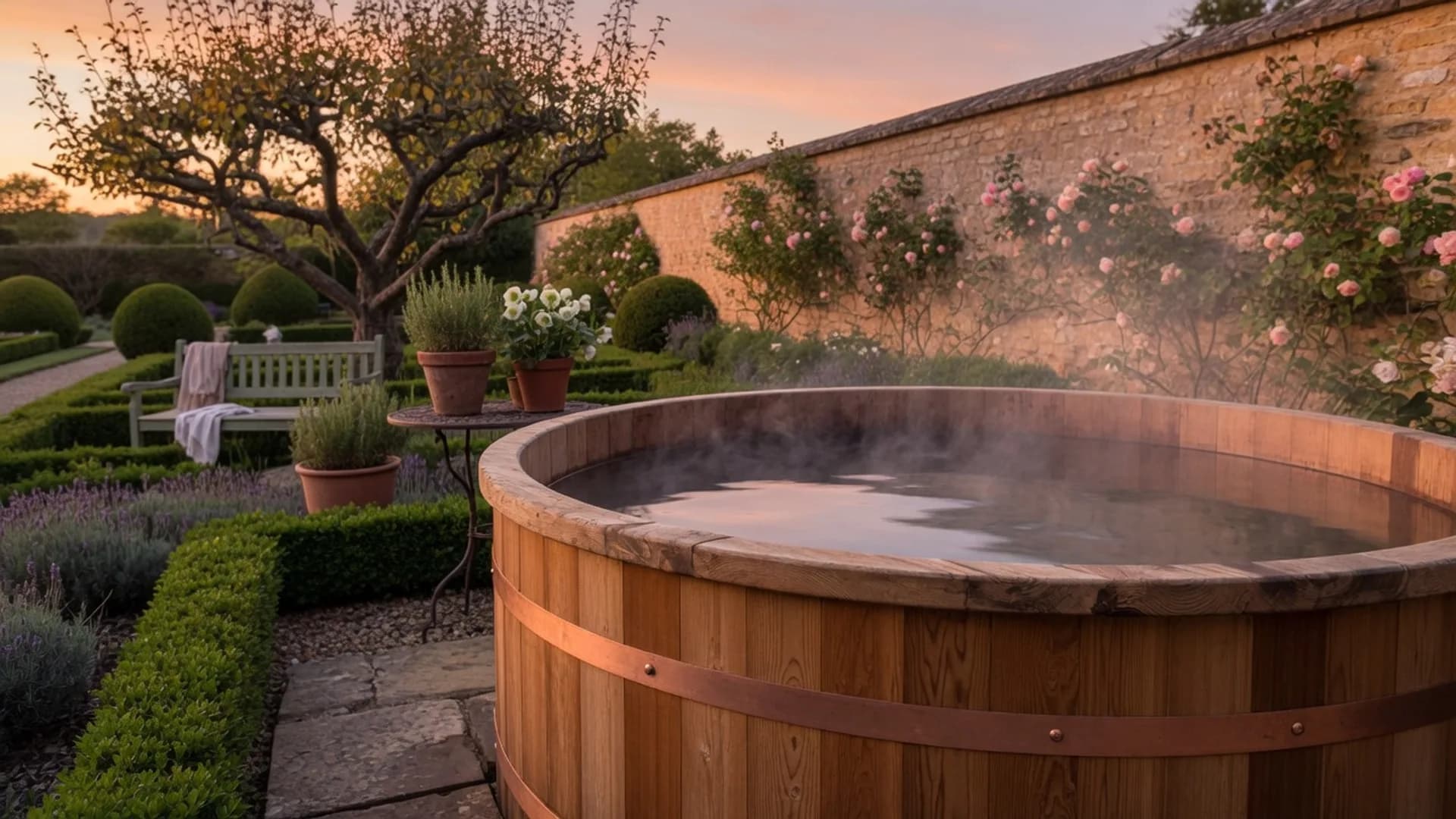
How to choose a garden hot tub without rushing
Choosing a garden hot tub is a decision about ritual, not only outdoor furniture. It is about how many people will soak, how often, what your garden can support, and who owns delivery, installation, and after-sales care. This guide organises the questions worth closing before you ask for a quote - without price lists, brand rankings, or technical promises that cannot be generalised honestly.
What a garden hot tub is
A garden hot tub (often a wooden outdoor soaking tub) is a vessel for outdoor relaxation: set in a garden, on a terrace, or in a wellness corner. It is not an indoor bathroom bath with the same plumbing assumptions. It is outdoor equipment with its own requirements for base, delivery access, heating, and water care.
In practice you are not only comparing shells. You are comparing a path: consultation and personalisation, then transport and installation, then service. That A-to-Z path is often as important as the build itself.
Start from how you will use it
Before you compare models, write down a realistic scenario:
- How many people will use the tub regularly - a couple, a family, weekend guests, a small glamping group?
- How often - several times a week, seasonally, or mainly for special occasions?
- Year-round interest or mainly warmer months? All-season use shifts priorities around shelter, winter access, and operating comfort.
- Private ritual or part of an offer (holiday home, small hospitality)? In the second case, durability under heavier use and clear service ownership matter more.
A precise use case reduces the risk of buying “spare capacity” you never need or a heat source that fights your lifestyle.
Size and capacity - match people and footprint
Capacity is not only a catalogue headcount. It is also:
- how much garden remains after the tub, paths, and access,
- whether you need steps, a platform, or screening,
- whether you want a close soak or looser space for guests.
Instead of defaulting to the largest model, ask the manufacturer:
- Which size fits X regular users and Y occasional guests?
- What is the real ground footprint including steps and accessories?
- How does the model affect transport and manoeuvring on the property?
Take dimensions and capacities only from current public product information - not from vague “typical” advice. The garden hot tub catalogue is the right place to compare variants after your criteria are clear.
Heating as classes of choice
Treat heating as experience categories, not as a table of guaranteed heat-up times.
Wood-fired heating - ritual, fire, evening atmosphere. It needs space for fuel, operating habits, and acceptance that warm-up pace depends on conditions and design - not a universal promise.
Electric heating - convenience and repeatability when the electrical setup is suitable. Verify what your property can support with a qualified professional; do not assume every tub “only needs a normal socket” or “always needs three-phase power”.
Hybrid / combined approaches - when you want flexibility: ritual on some days, convenience on others. Fit depends on the specific design and your site utilities.
Questions for an advisor instead of guesswork:
- Which heating class matches my soak frequency?
- What must I prepare for fuel storage or electrical work?
- What is standard on a model, and what is personalisation?
Materials and build quality - what to inspect
When you review construction, focus on qualitative checks:
- Exterior timber and structure - workmanship, joinery detail, and care guidance for weather and UV within the manufacturer’s recommendations.
- BaliaGo material families - including Termowood, Scandinavian spruce, and AISI 316 steel where a given model uses them. These are options in the brand portfolio, not a claim that only these materials exist in the market.
- Seals, hardware, and metal details - outdoor durability and finish quality.
- Serviceability - whether wear parts can be maintained without a one-shot construction.
You do not need unverified marketing certificates. You need clear answers: what the tub is built from, how to care for surfaces, and what service covers.
Placement, load-bearing base, and delivery access
Most post-purchase pain is site mismatch, not colour choice.
Check before you confirm an order:
- Base - can the ground, slab, or terrace support a filled tub plus people? That is a structural / building professional question for your property.
- Level and drainage - rainwater and any drain path need a sensible route.
- Access - gates, narrow paths, steps, slopes: can the tub be delivered and set without dismantling fencing?
- Surroundings - wind, privacy, neighbours, planned screens or covers.
- Utilities - fill water, drain, and any electrical supply - every property starts from a different baseline.
Transport, installation, and service - why A-to-Z matters
Buying the vessel is only half the story. The other half is:
- Consultation - size, heating class, and site fit.
- Personalisation - materials, equipment, and details for your scenario.
- Transport - delivery to the property within the agreed scope (BaliaGo delivers across Europe within the brand’s stated service area).
- Installation - placement and commissioning within the agreed scope.
- Service - who helps after a season of heavy use or when care is needed.
When comparing offers, ask plainly: what is included in the process, and what remains the owner’s responsibility? Clear ownership of transport, install, and service prevents more surprises than a polished render.
Hygiene and water care - ownership, not recipes
Every outdoor tub needs regular care of water and surfaces. Scope depends on design, filtration (if present), use intensity, and manufacturer guidance.
At selection stage, agree:
- who owns daily / weekly maintenance tasks,
- which products and procedures the manufacturer recommends (avoid improvised internet recipes),
- how often you plan to refresh water in your scenario,
- whether a cover will limit garden debris.
This is not a pool-chemistry article. It is a reminder that outdoor relaxation includes simple, recurring duties - and that knowing them before purchase is part of a good decision.
Decision checklist
Work through this list before you pick a model:
- Written use scenario (people, frequency, season).
- Size matched to garden and guests - not “largest available”.
- Heating class aligned with lifestyle and site utilities.
- Materials and build details discussed with an advisor (including Termowood, Scandinavian spruce, and AISI 316 options in the BaliaGo range).
- Site readiness: base, access, utilities - confirmed locally.
- Transport, installation, and service scope written into an A-to-Z process.
- Realistic plan for water care and cleanliness.
When those points are closed, browsing the catalogue is productive. Explore current BaliaGo garden hot tubs and book a consultation to match a variant to your garden - from conversation and personalisation through transport, installation, and service.
Talk with an advisor
We will help you choose a garden hot tub or outdoor sauna for your space — no obligation.
Contact us